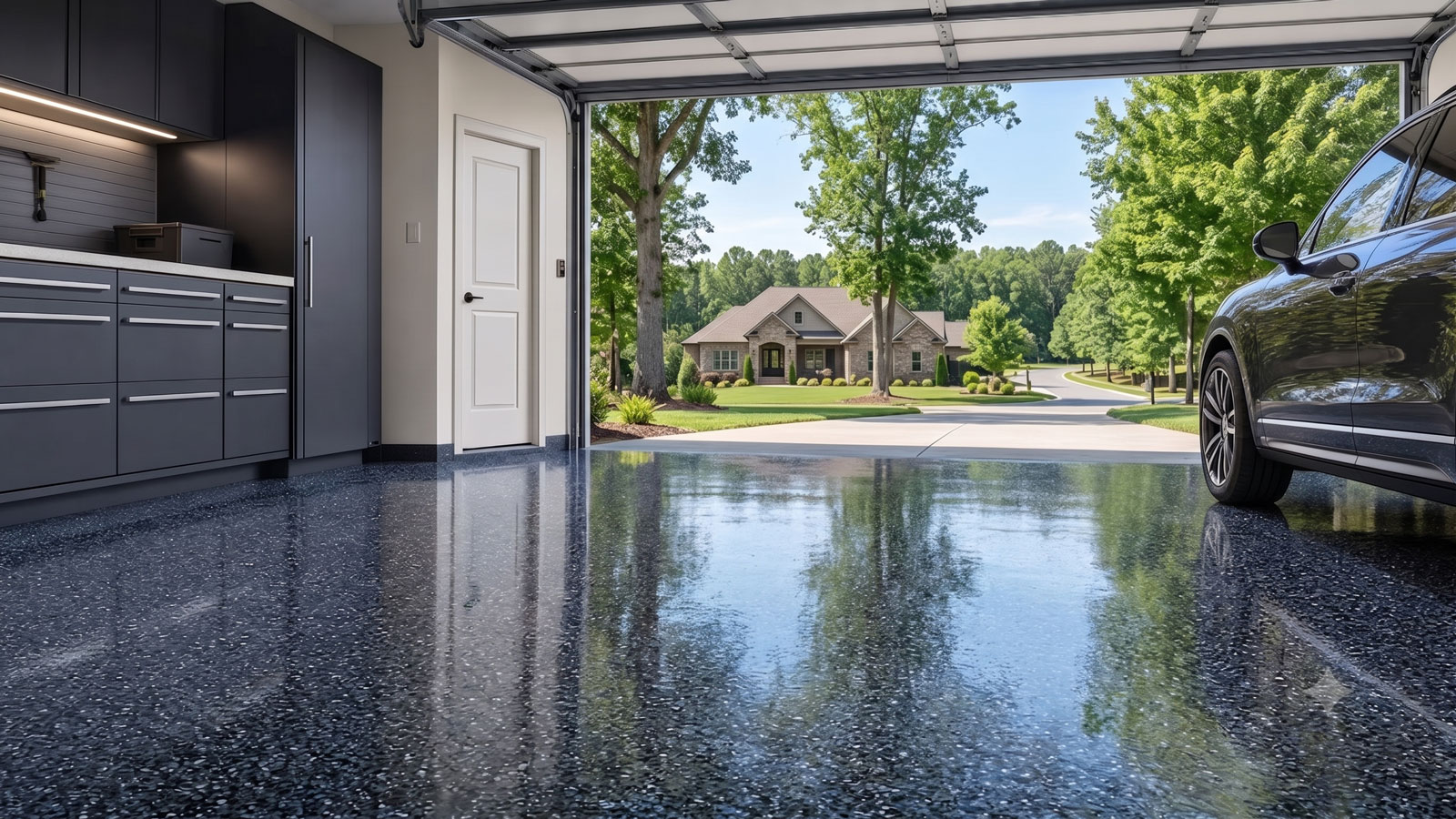
Garage Floor Coating in Haslett, MI
Floor Coating Services in Haslett, MI
Haslett is a Meridian Township community northeast and east of Lansing. Its suburban and lake-area residential context places it naturally within the Greater Lansing service territory. Haslett adds northeast Greater Lansing coverage, where winter vehicle moisture and practical garage use are relevant coating considerations. A Haslett garage may serve both lake-area recreation storage and everyday parking, but that does not establish flooding or moisture. Check actual tracked-in water and floor condition.
Garages can collect moisture, soil, and seasonal road residue from vehicles and everyday household use. Those conditions make slab inspection and a cleaning routine relevant before and after a coating project. If the floor stays damp without wet vehicles, investigate that condition rather than assuming a decorative resin layer can fix moisture entry.
The right system depends on the actual floor. An installer should consider moisture, stains, prior coatings, cracks, surface profile, and the finish selected for the way the garage will be used. Compare not just product names but the complete surface preparation, repair scope, traction, cleanup instructions, and parking downtime. That distinction should guide the estimate: routine grit can be cleaned, while recurring water from outside needs its source addressed before surface finishing.
Local Market Insight
Haslett adds northeast Greater Lansing coverage, where winter vehicle moisture and practical garage use are relevant coating considerations. A Haslett garage may serve both lake-area recreation storage and everyday parking, but that does not establish flooding or moisture. Check actual tracked-in water and floor condition.
What Affects the Cost of Garage Floor Coating in Haslett?
A Haslett coating estimate depends on the actual slab rather than floor area alone. Meridian Township and Lake Lansing residential approaches is background for local weather and runoff, not evidence of water or salt damage in a specific garage. Inspect paint, repairs, contamination and access before comparing systems.
For a home with snowmelt at the door and patched concrete, the quote should specify grinding, patching, edge treatment and removal of existing coatings as needed. Ask about moving possessions, finish texture and realistic vehicle-return time.
- Existing finish: Check whether paint, sealer, earlier epoxy, hard-troweled concrete or bare slab is present. House age does not establish the garage concrete's history or preparation needs.
- Winter tracking: Meridian Township and Lake Lansing residential approaches can be relevant to winter driving, but salt residue must be observed on the floor. Cleaning and abrasion should address the actual surface.
- Doorway moisture: Inspect snowmelt at the door and patched concrete alongside threshold grade, door seals and gutters. A wet vehicle is a different cause from recurring exterior runoff or persistent slab dampness.
- Cracks and repairs: Identify joints, patches, pitting and active cracks. Coatings cannot stop structural movement; the estimate must distinguish cosmetic patching from problems needing additional assessment.
- Floor layout: Cabinets, steps, drains, shelves and tight corners complicate mechanical grinding and finishing. Account for access and protection instead of pricing by square footage alone.
- Topcoat and cure: Flake density, texture, temperature limits, cleaning expectations and cure time affect the project. Confirm when cars and feet can return under the product specification.
Call for a clear, project-specific estimate — or request one online.
Winter Roads and Garage-Floor Care in Haslett
Meridian Township and Lake Lansing residential approaches gives this community a distinct setting, but no municipal map can determine a private concrete slab's condition. During Michigan winters, vehicles can carry road salt, grit and snowy water indoors. A properly prepared coating may improve cleanup, but it cannot prevent tracked-in puddles or eliminate maintenance. Wet-shoe traction and cleaning habits should influence the finish selected.
Before coating, differentiate water accumulating near tires from rain flowing through the doorway, and from dampness that appears without parked vehicles. These patterns call for different responses. Observe how the driveway slopes, whether seals work, and if old paint shows blistering. If exterior runoff repeatedly enters the garage, it must be addressed instead of concealed beneath resin.
An installer should identify oils, previous coatings, curing treatments, cracks and repairs before mechanically profiling the concrete. Ask which areas require removal or patching, and whether moisture testing is necessary. The final system needs to match the substrate and site conditions; a more expensive material does not compensate for inadequate preparation.
Evaluating a Haslett Garage Coating Quote
A home facing snowmelt at the door and patched concrete may need special attention where those issues are actually present. Yet a house's date does not prove the age of its garage slab, which may have been repaired or repoured separately. Contractors should document observed condition, not infer damage from community growth or development history.
Ask how grinding equipment will reach storage edges, step risers, door thresholds and around fixed fixtures. Clear tools and household items and decide where vehicles can park while the work cures. A written proposal should describe preparation steps, repair allowances, resin layers and manufacturer-specific return-to-service requirements.
Only then compare epoxy, polyaspartic and decorative flake choices. Texture, appearance and the amount of traction suitable for wet shoes can vary between finished systems. Choose based on actual concrete, garage use, installation schedule and practical care. A contractor who explains limitations and substrate preparation gives more useful guidance than one promising the same coating is right everywhere.
- Check previous paint and sealer.
- Mark cracks and repaired areas.
- Look at door-threshold runoff after rain.
- Separate vehicle snowmelt from ongoing dampness.
- Plan storage clearance and alternate parking.
- Obtain maintenance and cure instructions.
Frequently Asked Questions
Is winter road salt always a problem in Haslett?
No. Meridian Township and Lake Lansing residential approaches is geographic context, but salt contamination and damage require actual inspection. Look for real residue, coatings and cracks before deciding on cleaning or repairs.
Can an older Haslett garage floor be coated?
Possibly. The slab may have been replaced or painted after the house was built. An installer should check soundness, old coatings, patches and moisture before proposing a system.
What if water enters through my garage door?
Correct recurring runoff at the driveway or threshold before coating. Meltwater under wet parked vehicles is not the same as persistent slab moisture. A new coating cannot substitute for drainage repair.
Is epoxy or polyaspartic the better Haslett option?
Neither is automatically better. Grinding, crack treatment, full coating layers, temperature, cure needs and traction determine suitability. Compare the complete installation rather than relying on a product category alone.
What should I ask a Haslett contractor?
Ask about removal of old finishes, mechanical preparation, actual repairs, coating layers, edge details, texture, warranty and return-to-parking time. Confirm where belongings will go during installation.
Haslett Neighborhoods & Local Context
Phone Quote Line
Speak with a local floor coating specialist about your project and get a realistic estimate range.
(517) 888-7714Typical Project Cost
$3,000–$5,500
Typical range for a standard two-car garage. Final pricing depends on floor size, concrete condition, prep work, coating type, and finish options.
Helpful Guides
Other Service Areas